


What Technical Capabilities Should Buyers Evaluate in a Car Fridge

Evaluating a car fridge manufacturer requires a granular assessment of the internal architecture and component selection. The transition from entry-level thermoelectric coolers to premium compressor-based models necessitates strict technical scrutiny to ensure long-term field reliability.
Which compressor, insulation, power management, and temperature
control features matter most?
The heart of any premium car refrigerator is its DC inverter compressor, which dictates both cooling speed and energy consumption. Leading manufacturers integrate high-efficiency compressors capable of reaching -20°C internal temperatures within just 30 minutes of activation. Insulation is equally critical; high-density polyurethane (PU) foam, typically injected at a density of 40 kg/m³, minimizes thermal bridging and reduces compressor cycle times. Additionally, intelligent power management systems featuring 3-stage battery protection (High, Medium, Low voltage cut-offs) are essential to prevent the appliance from draining the host vehicle’s starter battery below safe cranking thresholds.
How do durability, noise, vibration resistance, and energy effic
iency affect performance?
Operational environments for automotive electronics are inherently hostile, demanding specific mechanical tolerances. Compressors must feature robust anti-vibration mountings capable of sustaining continuous operation at tilt angles of up to 30 degrees without suffering lubrication failure or mechanical binding. Acoustic performance is another major differentiator in the premium segment; superior acoustic dampening materials and precision motor balancing keep operational noise consistently below the 45 dB threshold, ensuring the unit remains unobtrusive within the cabin of a passenger vehicle or recreational RV.
Which product configurations best support OEM, private label, an
d custom programs?
Strategic procurement requires access to diverse product configurations that align with specific go-to-market strategies. Buyers must evaluate a supplier’s capacity to deliver single-zone units for dedicated deep-freeze applications, alongside dual-zone models that feature independent temperature controls.
| Configuration Type | Typical Capacity Range | Target Application | Average Power Draw (12V) |
|---|---|---|---|
| Single-Zone | 15L – 60L | Commuter / Day Trips | 35W – 45W |
| Dual-Zone (Independent) | 40L – 80L | Overlanding / RVs | 45W – 60W |
| Multi-Compartment Custom | 60L+ | Commercial / Medical | 60W – 85W |
OEM and private label programs benefit from this modularity, allowing brands to specify lid opening directions, digital interface layouts, and exterior chassis materials ranging from high-impact ABS plastic to heavy-duty, dent-resistant stainless steel.
What Sourcing, Logistics, and Commercial Factors Should Be Compared Befo
Beyond technical specifications, the commercial viability of a car fridge program depends heavily on the supplier’s logistical agility and sophisticated supply chain management capabilities. Sourcing professionals must evaluate operational metrics to ensure profitable scaling.
How should buyers compare lead times, minimum order quantities
, and payment terms?
Buyers must rigorously evaluate minimum order quantities (MOQs) and lead times to optimize their working capital and inventory turnover. A mature car fridge manufacturer typically structures MOQs between 100 to 500 units per SKU, balancing production efficiency with the buyer’s warehousing constraints. Standard production lead times hover around 30 to 45 days post-deposit, though premium suppliers offer expedited tracks for established partners during peak seasonal ramps. Payment terms also serve as a crucial differentiator, with standard 30% advance and 70% against bill of lading (B/L) structures providing mutual financial security for cross-border transactions.
What total landed cost factors matter most in cross-border
sourcing?
Cross-border sourcing necessitates a comprehensive analysis of the total landed cost, which extends far beyond the ex-works (EXW) or free on board (FOB) unit price. Packaging density plays a pivotal role in this calculation; optimizing the dimensions of the master carton can significantly increase the number of units loaded per 40HQ container, directly driving down per-unit ocean freight costs.
| Cost Component | Percentage of Total Landed Cost | Primary Driver |
|---|---|---|
| Unit Price (FOB) | 65% – 75% | Components (Compressor, Chassis, PCBA) |
| Ocean Freight | 10% – 15% | Container utilization & shipping lane rates |
| Tariffs & Duties | 5% – 15% | HS Code classification & country of origin |
| Inland Logistics | 2% – 5% | Destination port to warehouse distance |
By carefully mapping these variables, procurement teams can protect their margins against fluctuating global freight indices and unexpected terminal handling charges.
Which supply continuity and escalation controls reduce risk acro
ss programs?
To mitigate risks associated with geopolitical shifts or raw material shortages, buyers must ensure their supplier practices robust supply continuity planning. This involves maintaining strategic safety stock of critical components, particularly microcontrollers and DC compressors, and utilizing dual-sourcing strategies for secondary materials like plastics and insulation chemicals. Effective escalation controls and transparent communication channels are vital to navigating unforeseen disruptions without compromising the delivery schedules of major retail programs.
Why Is NINGBO ICEBERG Positioned as a Strategic Partner for
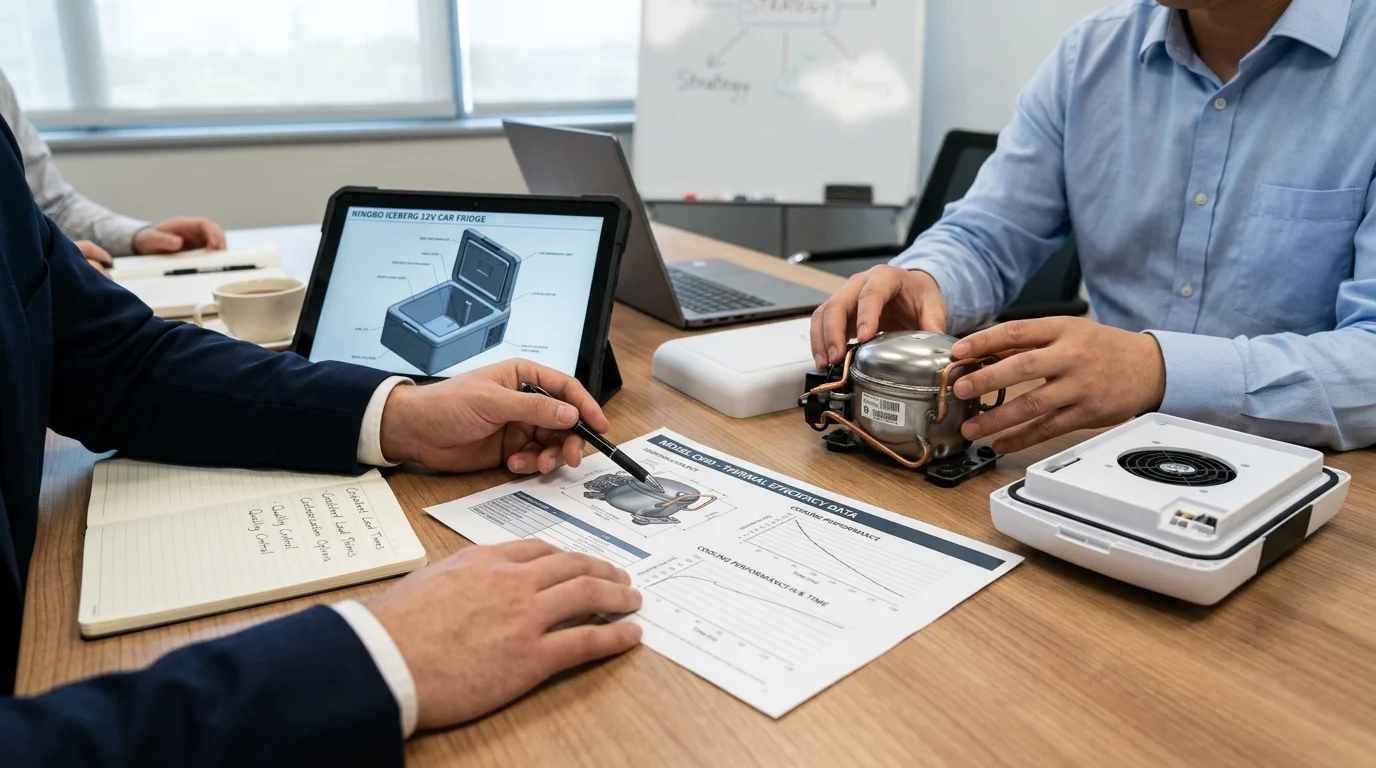
Selecting a car fridge manufacturer is a strategic decision that fundamentally impacts product lifecycle, brand reputation, and corporate profit margins. NINGBO ICEBERG stands out as a specialized entity equipped to handle the complexities and scale required by premium automotive electronics buyers.
How does its manufacturing capability support specification cont
rol and scale?
The manufacturing infrastructure at NINGBO ICEBERG is engineered to support both high-mix, low-volume custom projects and large-scale standard production runs. With automated assembly lines, precision refrigerant injection stations, and dedicated testing laboratories, the facility boasts an impressive annual production capacity exceeding 500,000 units. This scale ensures that buyers can rely on consistent specification control, uniform aesthetic finishes, and reliable fulfillment, even during peak seasonal demand spikes in the automotive and outdoor recreation markets.
What decision criteria should buyers use to confirm fit
?
When confirming supplier fit, procurement teams should utilize a comprehensive decision matrix that looks beyond unit pricing. Key criteria include the manufacturer’s verifiable track record in compressor integration, the depth and validity of their compliance portfolio, and their willingness to engage in transparent cost-breakdown discussions during the quotation phase. By prioritizing these structural elements, buyers establish a resilient partnership with NINGBO ICEBERG, securing a definitive competitive advantage in the rapidly expanding market for advanced vehicle refrigeration technology.
Key Takeaways
- The most important conclusions and rationale for car fridge manufacturer
- Specs, compliance, and risk checks worth validating before you commit
- Practical next steps and caveats readers can apply immediately
Frequently Asked Questions
Why choose NINGBO ICEBERG as a car fridge manufacturer?
NINGBO ICEBERG offers compressor-based car fridges, OEM/private label support, and a fast 45-day prototyping cycle to speed product launch.
What temperature can ICEBERG car refrigerators reach?
Premium compressor models can cool down to -20°C, making them suitable for frozen storage, road trips, camping, and mobile cold-chain use.
Are ICEBERG car fridges compatible with 12V and 24V vehicles?
Yes. Many models are designed for 12V/24V vehicle systems and can also work with portable power stations for outdoor use.
How does battery protection work in a car fridge?
ICEBERG models use 3-stage battery protection with high, medium, and low voltage cut-offs to help prevent draining your vehicle’s starter battery.
Can cniceberg.com support custom OEM or private label car fridge projects?
Yes. cniceberg.com supports OEM and private label programs with options like capacity selection, lid direction, control panel layout, and exterior material customization.

Miya
Post time: May-07-2026