


For most pharmaceutical and cosmetic OEM buyers, the question of medical-grade vs food-grade material is one of the first decisions the buyer has to make on a portable cooling enclosure, and the decision is the first decision because the decision sets the destination-market compliance framework, the per-piece tooling cost, and the per-piece lead time on the buyer’s program. The decision is the first decision because the decision sets the buyer’s per-piece material spec sheet, the buyer’s per-piece destination-market documentation, and the buyer’s per-piece audit trail. The decision is the first decision because the right answer for a pharma insulin program is not the right answer for a cosmetic skincare program, and the right answer for a cosmetic skincare program is not the right answer for a dual-use program. Because the right answer depends on the application, the right way to make the decision is to apply a four-step selection procedure to the buyer’s application category, the buyer’s compliance framework, and the buyer’s supply chain, and the right way to apply the four-step selection procedure is to run the procedure against the buyer’s per-batch certificate of analysis and the buyer’s destination-market regulatory clearance. This guide walks through the four-step selection procedure, the ABS and PP material matrix, the application matching, the compliance mapping, and the common mistakes when specifying medical-grade vs food-grade enclosures, drawing on the portable insulin cooler box and the custom 4-liter cosmetic mini fridge from Ningbo Iceberg, with reference to the broader cooler box line for the outdoor and vehicle cooler programs.
Why “Medical-Grade” and “Food-Grade” Are Not the Same Standard for Portable Cooling Enclosures
There is a structural reason “medical-grade” and “food-grade” are not the same standard for a portable cooling enclosure. The two standards are the right standards for two different application categories, and the two standards target two different contact conditions, and the two standards carry two different documentation stacks. A medical-grade ABS targets biologic-contact with a 2 to 8 degree C storage window and FDA 21 CFR biologic compatibility documentation, and a food-grade ABS targets food-contact with a broader temperature window and FDA 21 CFR 177.1520 food-contact documentation. Because the two standards target two different contact conditions, the right way to choose between the two standards is to choose the contact condition first, and the right way to choose the contact condition is to set the buyer’s application category before the buyer’s spec sheet.
There is a second reason the two standards are not the same. The medical-grade standard carries a tighter per-batch documentation stack, and the per-batch documentation stack includes a per-batch migration test, a per-batch biocompatibility summary, and a per-batch storage and handling log. The food-grade standard carries a lighter per-batch documentation stack, and the lighter per-batch documentation stack includes a per-batch food-contact certification, a per-batch heavy-metal migration test, and a per-batch storage and handling log. The two documentation stacks are the right stacks for the two contact conditions, and the two documentation stacks are the right stacks to defend the two standards on the buyer’s spec sheet.
There is a third reason the two standards are not the same. The medical-grade standard typically costs more per-piece than the food-grade standard, and the per-piece cost difference is set by the per-batch documentation stack. The per-piece cost difference is not the only variable, and the per-piece cost difference is not the only variable to defend the buyer’s per-piece spec sheet. The per-piece cost difference is the variable to defend the buyer’s per-piece material choice, and the per-piece cost difference is the right variable to set the buyer’s per-piece destination-market documentation. For the broader refrigeration and materials industry context that frames the medical-grade and food-grade discussion, the BloombergNEF insights on industrial materials is the right practitioner reference for the materials framework that the medical-grade and food-grade discussion has to satisfy.
What Is ABS in a Portable Cooling Enclosure, and What Does “Medical-Grade ABS” Actually Mean?
ABS (Acrylonitrile Butadiene Styrene) is the right enclosure material for cosmetic and dual-use portable cooling programs, and the right reason is the right reason to choose ABS over PP for the cosmetic and dual-use programs. ABS is rigid, ABS is impact resistant, ABS has good low-temperature performance, and ABS is available in China GB 4806 and EU Regulation 10/2011 food-contact grades for cosmetic storage and portable cooler use. The right ABS grade is the right grade for the cosmetic and dual-use program, and the right ABS grade is the right grade to publish on the buyer’s per-piece spec sheet.
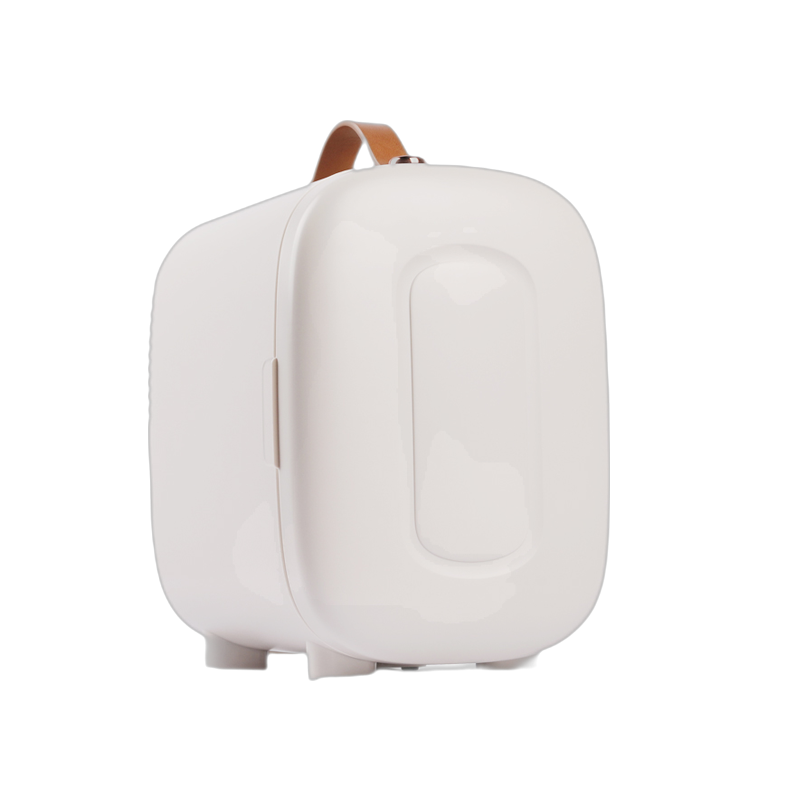
The right way to read “medical-grade ABS” on a portable cooling enclosure spec sheet is to read the right four-field documentation that the supplier has to publish with the right ABS grade. The right four-field documentation is: (1) the right ABS resin grade with the right per-batch certificate of analysis, (2) the right per-batch migration test on the right ABS surface, (3) the right per-batch biocompatibility summary on the right ABS surface, and (4) the right per-batch storage and handling log on the right ABS surface. The right four-field documentation is the right documentation to defend the buyer’s per-piece material choice, and the right four-field documentation is the right documentation to publish on the buyer’s per-piece spec sheet.
The right ABS grade for an insulin cold-chain program is PU+ABS, where PU (polyurethane) is the right inner liner for soft-touch ergonomics and ABS is the right outer shell for impact resistance. The right PU+ABS combination is the right combination for the right insulin cold-chain program, and the right PU+ABS combination is the right combination to publish on the buyer’s per-piece spec sheet. The right PU+ABS combination is the right combination to defend the buyer’s per-piece material choice, and the right PU+ABS combination is the right combination to defend the buyer’s per-piece destination-market documentation. For the ABS material standard that the buyer’s per-piece spec sheet has to reference, the ASTM standards catalogue is the right North American reference for the test methods and the tolerance bands that the buyer’s per-piece spec sheet has to respect.
What Is PP in a Portable Cooling Enclosure, and What Does “Food-Grade PP” Actually Mean?
PP (Polypropylene) is the right enclosure material for food-contact and beverage portable cooling programs, and the right reason is the right reason to choose PP over ABS for the food-contact and beverage programs. PP is lightweight, PP has high chemical resistance, PP is autoclavable to 121 degree C, and PP is available in FDA 21 CFR 177.1520 food-contact grade for portable cooler use. The right PP grade is the right grade for the food-contact and beverage program, and the right PP grade is the right grade to publish on the buyer’s per-piece spec sheet.

The right way to read “food-grade PP” on a portable cooling enclosure spec sheet is to read the right four-field documentation that the supplier has to publish with the right PP grade. The right four-field documentation is: (1) the right PP resin grade with the right per-batch certificate of analysis, (2) the right per-batch food-contact certification on the right PP surface, (3) the right per-batch heavy-metal migration test on the right PP surface, and (4) the right per-batch storage and handling log on the right PP surface. The right four-field documentation is the right documentation to defend the buyer’s per-piece material choice, and the right four-field documentation is the right documentation to publish on the buyer’s per-piece spec sheet.
The right PP grade for a food-and-beverage cooler program is PP+talc, where PP is the right base resin for chemical resistance and talc is the right filler for rigidity. The right PP+talc combination is the right combination for the right food-and-beverage cooler program, and the right PP+talc combination is the right combination to publish on the buyer’s per-piece spec sheet. The right PP+talc combination is the right combination to defend the buyer’s per-piece material choice, and the right PP+talc combination is the right combination to defend the buyer’s per-piece destination-market documentation. For the PP material standard that the buyer’s per-piece spec sheet has to reference, the ASTM standards catalogue is the right North American reference for the test methods and the tolerance bands that the buyer’s per-piece spec sheet has to respect.
How Do You Match the Material to the Application: Pharma, Cosmetic, or Dual-Use?
The right way to match the material to the application is to set the application category first, the compliance framework second, and the supply chain third. The right three-step matching procedure is the right procedure to apply on a per-program basis, and the right three-step matching procedure is the right procedure to publish on the buyer’s per-piece spec sheet. The right three-step matching procedure is the right procedure to defend the buyer’s per-piece material choice, and the right three-step matching procedure is the right procedure to defend the buyer’s per-piece destination-market documentation. Because the right three-step matching procedure is the right procedure to defend, the right way to apply the procedure is to apply the procedure on a per-program basis, and the right way to defend the procedure is to publish the procedure on the buyer’s per-piece spec sheet.
The application category is the first step. The right application category is the right category to set the buyer’s per-piece material choice, and the right application category is the right category to set the buyer’s per-piece destination-market documentation. Pharma programs target insulin, vaccines, and biologics with a 2 to 8 degree C storage window. Cosmetic programs target skincare serums, retinoids, and vitamin C with a 12 to 18 degree C storage window. Dual-use programs target both, and the right dual-use program is the right program to set the buyer’s per-piece material choice on the strictest of the two programs. The right way to set the application category is to publish the application category on the buyer’s per-piece spec sheet, and the right way to set the application category is to set the application category before the buyer’s per-piece material spec sheet is written.
The compliance framework is the second step. FDA 21 CFR 177.1520 for the US market for food-contact applications. EU Regulation 10/2011 for the EU market for food-contact applications. China GB 4806 for the China market for food-contact applications. The three frameworks converge on the food-contact threshold, and the right compliance documentation is the documentation that satisfies the strictest of the three frameworks. The right way to set the compliance framework is to publish the framework on the buyer’s per-piece spec sheet, and the right way to set the compliance framework is to set the framework before the buyer’s per-piece material spec sheet is written.
The supply chain is the third step. The right supply chain is the right chain to set the buyer’s per-piece material choice, and the right supply chain is the right chain to set the buyer’s per-piece destination-market documentation. The right supply chain is the chain that the supplier can defend on the destination-market regulatory clearance, and the right supply chain is the chain that the buyer can publish on the buyer’s per-piece spec sheet. For the per-piece material hardware and the per-piece material tooling, the cross-industry inventory maintained by McMaster-Carr is a useful North American reference for the per-piece material hardware and the per-piece material tooling that the right supply chain has to respect.
What Are the FDA, EU, and China Compliance Standards for ABS and PP Enclosures?
The right way to read the FDA, EU, and China compliance standards for ABS and PP enclosures is to map the three frameworks to the right application, the right material, and the right documentation. The three frameworks are not the same standard, and the three frameworks are the right standards for three different markets. The right mapping is FDA 21 CFR for the US market, EU Regulation 10/2011 for the EU market, and China GB 4806 for the China market. The right three-framework mapping is the right mapping to publish on the buyer’s per-piece spec sheet, and the right three-framework mapping is the right mapping to defend the buyer’s per-piece material choice. Because the right three-framework mapping is the right mapping to defend, the right way to apply the mapping is to apply the mapping on a per-program basis, and the right way to defend the mapping is to publish the mapping on the buyer’s per-piece spec sheet.
FDA 21 CFR 177.1520 is the right US standard for olefin polymers (including PP) used in food-contact applications, and the right US standard for ABS is FDA 21 CFR 181.32 (acrylonitrile copolymers) for food-contact applications. The right US standard for medical-grade enclosures is FDA 21 CFR 820 (Quality System Regulation) and the right US standard for medical device accessories is FDA 21 CFR 803 (Medical Device Reporting) and 21 CFR 807 (Establishment Registration and Device Listing). The right way to publish the right US standard is to publish the right US standard on the buyer’s per-piece spec sheet, and the right way to defend the right US standard is to publish the right US standard on the buyer’s destination-market documentation. For the right US standard, the FDA medical devices portal is the right North American reference for the right US standard that the buyer’s per-piece spec sheet has to reference.
EU Regulation 10/2011 is the right EU standard for plastic materials and articles intended to come into contact with food. The right EU standard for the right EU market is the right EU standard for food-contact applications, and the right EU standard for medical device accessories is EU Medical Device Regulation 2017/745. The right way to publish the right EU standard is to publish the right EU standard on the buyer’s per-piece spec sheet, and the right way to defend the right EU standard is to publish the right EU standard on the buyer’s destination-market documentation. China GB 4806 is the right China standard for food-contact plastic materials, and the right China standard for food-contact applications is GB 4806.1 (General Safety Requirements) and GB 4806.7 (Plastic Materials). The right way to publish the right China standard is to publish the right China standard on the buyer’s per-piece spec sheet, and the right way to defend the right China standard is to publish the right China standard on the buyer’s destination-market documentation. For the right US environmental compliance framework that the right enclosure material has to satisfy, the EPA regulatory programme is the right North American reference for the right environmental compliance framework that the right enclosure material has to satisfy.
The right way to use the three frameworks together is to use the strictest of the three as the per-batch documentation baseline, and the right way to use the strictest of the three is to publish the strictest on the buyer’s per-piece spec sheet. The right way to defend the three frameworks is to publish the right per-batch documentation on the buyer’s destination-market regulatory clearance, and the right way to defend the three frameworks is to publish the right per-batch documentation on the buyer’s per-piece spec sheet.
What Are the Most Common Mistakes When Specifying Medical-Grade vs Food-Grade Enclosures?
After enough portable cooling enclosure programs, the same five mistakes show up. They are not exotic. They are the predictable costs of treating the medical-grade and food-grade standards as interchangeable, and they show up most often on a new OEM buyer that is launching a portable cooling program for the first time.
- Treating medical-grade and food-grade as the same standard. The most common mistake is to specify “medical-grade ABS” on a cosmetic storage enclosure, on the assumption that the medical-grade is the safer choice. The assumption is wrong. The medical-grade standard carries a tighter per-batch documentation stack, and the medical-grade standard costs more per-piece. The right way to fix this is to set the application category first, and the right way to set the application category is to publish the right application category on the buyer’s per-piece spec sheet.
- Specifying the right material but the wrong per-batch documentation. The second most common mistake is to specify ABS or PP on the buyer’s per-piece spec sheet without specifying the per-batch documentation. The right way to fix this is to publish the right per-batch documentation on the buyer’s per-piece spec sheet, and the right documentation is the right certificate of analysis, the right migration test, and the right storage and handling log.
- Skipping the destination-market regulatory framework on the spec sheet. The third most common mistake is to specify ABS or PP without specifying the right destination-market regulatory framework. The right way to fix this is to publish the right destination-market regulatory framework on the buyer’s per-piece spec sheet, and the right framework is the right FDA 21 CFR, EU Regulation 10/2011, or China GB 4806 documentation that the right destination market requires.
- Skipping the per-batch certificate of analysis on the per-piece spec sheet. The fourth most common mistake is to skip the per-batch certificate of analysis on the buyer’s per-piece spec sheet. The right per-batch certificate of analysis is the right certificate to defend the right material choice on the right destination-market regulatory clearance, and the right way to fix this is to publish the right per-batch certificate of analysis on the buyer’s per-piece spec sheet.
- Treating the storage and handling log as a one-time project document. The fifth most common mistake is to treat the per-batch storage and handling log as a one-time project document, and the right way to fix this is to publish the per-batch log on the per-piece spec sheet, and the right way to defend the per-batch log is to publish the per-batch log against the destination-market regulatory clearance. For the broader plastic lifecycle and the per-batch recycling context that the per-batch storage and handling log has to satisfy, the VinylPlus programme is the right cross-industry reference for the per-batch plastic lifecycle and the per-batch recycling context.
None of these mistakes are unique to medical-grade or food-grade enclosures. They are the standard material-spec mistakes dressed up in portable cooling programs, and the fix is the same four-step matching procedure, applied on a per-program basis, with the matching procedure published on the buyer’s per-piece spec sheet. The right way to think about the four-step matching procedure is that the procedure is the buyer’s material quality system, and the right way to defend the four-step matching procedure is to publish the matching procedure on the buyer’s per-piece spec sheet.
Frequently Asked Questions
What is the difference between medical-grade and food-grade ABS for a portable cooling enclosure?
Medical-grade ABS targets biologic-contact with a 2 to 8 degree C storage window and FDA 21 CFR biologic compatibility documentation. Food-grade ABS targets food-contact with a broader temperature window and FDA 21 CFR 177.1520 food-contact documentation. The two standards are not interchangeable on a portable cooling enclosure, and the right way to choose between the two is to set the application category first (pharma, cosmetic, or dual-use) and the right documentation stack second.
What is the right enclosure material for an insulin cold-chain portable cooling program?
PU+ABS is the right enclosure material for an insulin cold-chain portable cooling program, where PU (polyurethane) is the right inner liner for soft-touch ergonomics and ABS is the right outer shell for impact resistance. The right PU+ABS combination is the right combination to publish on the buyer’s per-piece spec sheet, and the right PU+ABS combination is the right combination to defend the buyer’s per-piece material choice.
What is the right enclosure material for a cosmetic and skincare portable cooling program?
ABS is the right enclosure material for a cosmetic and skincare portable cooling program, with the right ABS grade available in China GB 4806 and EU Regulation 10/2011 food-contact grades. The right ABS grade is the right grade for the cosmetic and skincare program, and the right ABS grade is the right grade to publish on the buyer’s per-piece spec sheet.
What is the right enclosure material for a food and beverage portable cooling program?
PP (Polypropylene) is the right enclosure material for a food and beverage portable cooling program, where PP is lightweight, has high chemical resistance, and is autoclavable to 121 degree C. The right PP grade is available in FDA 21 CFR 177.1520 food-contact grade for portable cooler use, and the right PP grade is the right grade to publish on the buyer’s per-piece spec sheet.
Post time: Oct-14-2026