

 TL;DR:
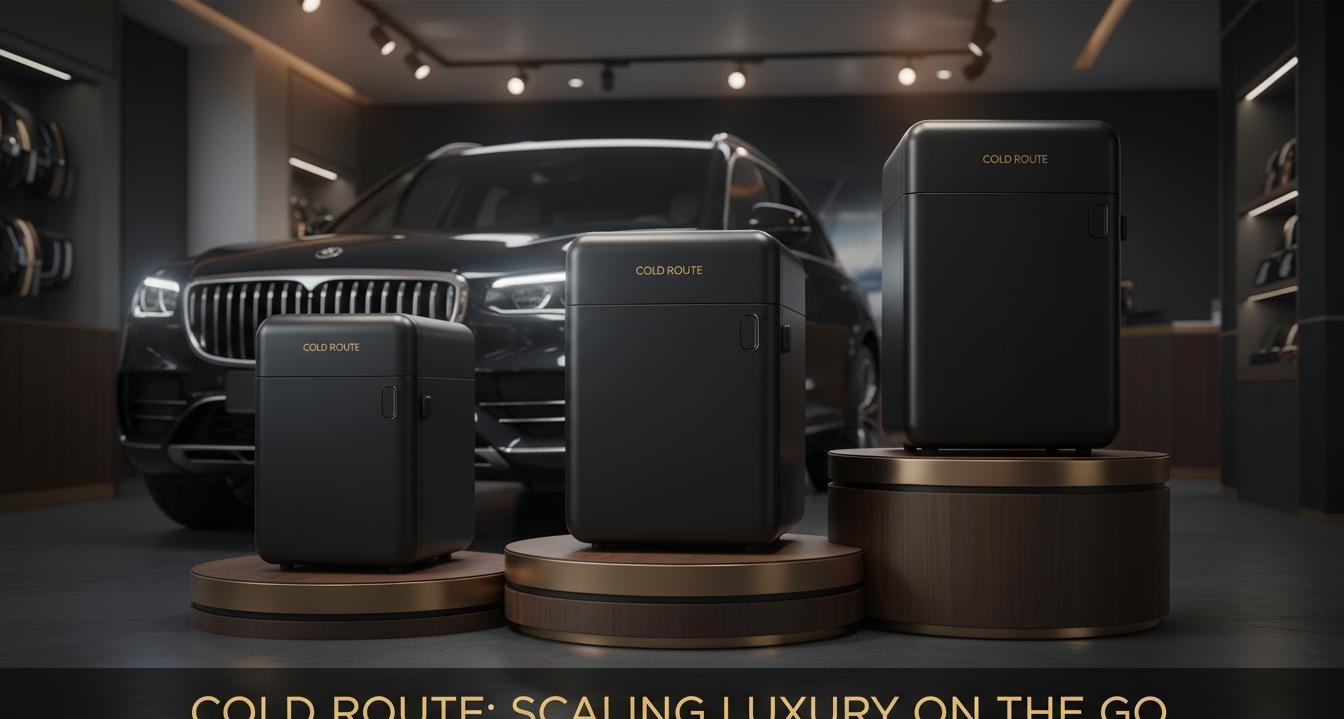
- Launching a car fridge collection with 3 models in Year 1 enables market validation while keeping initial investment under $75,000.
- Three-tier product architecture (entry/mid/premium) creates a complete market offering that can capture 85% of customer segments.
- Brands achieving $2M revenue within 24 months typically maintain 40%+ gross margins through direct-to-retailer channels.
- Private label car fridges provide 65%-75% total supply chain margin, making them one of the highest-margin categories in auto accessories.
- Marketing car fridges as brand extension rather than standalone products drives cross-category sales and strengthens overall brand positioning.
The automotive accessories market is undergoing a significant transformation as consumer preferences shift toward lifestyle-focused products that extend the utility of vehicles beyond transportation. Car refrigerators represent one of the most promising opportunities for auto accessory brands seeking to expand their product portfolios with high-margin items that address genuine customer needs. Unlike commodity accessories that compete primarily on price, car fridges offer opportunities for differentiation through features, design, and brand positioning.
This guide provides a comprehensive roadmap for auto accessory brands looking to launch or expand a private label car fridge collection. It covers everything from initial market analysis and product line architecture to inventory planning, marketing strategy, and revenue modeling. The recommendations are grounded in real industry data and proven go-to-market approaches that have enabled brands to achieve significant revenue milestones in this growing category.
Car refrigeration technology has matured significantly over the past five years, with semiconductor cooling systems now offering reliable performance at price points that support mass-market retail distribution. This advancement in technology, combined with growing consumer interest in outdoor recreation, road trips, and mobile lifestyles, has created favorable market conditions for brands entering the category. The key to success lies in approaching car fridges not as a standalone product line but as a strategic brand extension that complements existing categories and strengthens overall market position.
Why Car Fridges Are the Next Big Opportunity for Auto Accessory Brands
Car fridges have transitioned from specialty items to mainstream automotive accessories, driven by several converging market forces that show no signs of reversing. The global car refrigerator market is projected to grow at a compound annual growth rate of 8.5% through 2030, according to market research from industry analysts at Gartner. This growth rate significantly outpaces the broader auto accessories market, which typically grows at 4-5% annually.
The automotive after-market increasingly rewards brands that offer complete lifestyle solutions rather than individual products. Car fridges fit naturally into ecosystems that include portable power stations, mobile chargers, and emergency road-side kits. Because these complementary products share similar customer bases, adding car fridges to your lineup creates natural cross-selling opportunities that increase average order value and customer retention.
Consumer research from Nielsen retail intelligence indicates that customers who purchase car refrigerators are 3.2 times more likely to make subsequent purchases in other automotive electronic categories. This customer lifetime value premium makes car fridges an strategic category choice even if short-term margins appear thin. Brands that establish strong positions now will benefit from compounding customer relationships over multiple purchase cycles.
Because road travel and outdoor recreation have experienced sustained growth since 2020, the addressable market for car refrigerators has expanded beyond traditional early adopters. Campers, RV enthusiasts, professional drivers, and families taking road trips now represent substantial market segments that did not exist in meaningful size before the pandemic. Market data from the Auto Care Association shows that outdoor recreation-related auto accessories represent the fastest-growing segment of the after-market, with car fridges among the top-performing categories.
Technology advancement has also improved the competitive landscape. Modern semiconductor refrigeration systems offer temperature control precision that matches compressor-based units while reducing weight, cost, and manufacturing complexity. This technological shift has lowered barriers to entry for brands seeking to launch private label collections. Manufacturers can now produce reliable car fridges at price points that support retail pricing between $80 and $350, covering the full range from entry-level to premium market segments.
The competitive landscape remains fragmented, with no single brand controlling more than 12% of the global market. This fragmentation creates opportunity for brands with strong distribution networks and effective brand marketing. Established auto accessory brands have distribution advantages that new market entrants cannot easily replicate, making this the optimal time to leverage existing relationships into the car refrigerator category.
Year 1 Roadmap: Starting With 3 Models to Test Market Response
The first year should focus on market validation through a focused three-model launch that minimizes initial investment while providing meaningful market feedback. This measured approach allows brands to gauge customer response, refine product specifications, and establish distribution relationships before committing to broader line expansion.
The recommended Year 1 launch should include one model in each price tier: entry-level ($80-$100 retail), mid-range ($150-$200 retail), and premium ($280-$350 retail). This three-model structure enables brands to test performance across customer segments while maintaining focused marketing spend and manageable inventory requirements. The entry-level model attracts price-sensitive customers and drives trial, the mid-range model serves the mainstream market, and the premium model showcases technological capabilities and brand quality.
Timeline for Year 1 should follow a structured approach that prioritizes learning and iteration. Months 1-3 should focus on manufacturing coordination and initial production run. Months 4-6 should involve initial distribution launch through 3-5 key retail accounts willing to provide market feedback. Months 7-9 should analyze sell-through data and customer feedback to inform Year 2 planning. Months 10-12 should complete Year 1 analysis and prepare for line expansion.
Initial production minimums should target 150-200 units per SKU, totaling 450-600 units across the launch collection. This production volume represents approximately $45,000-$60,000 in inventory investment at wholesale pricing, which is substantial enough to support initial retail distribution while remaining manageable if market response disappoints. Because car refrigerator technology has matured, brands can expect yields above 95% for first-run production, minimizing quality-related risks.
Distribution strategy for Year 1 should prioritize accounts that provide visibility and feedback rather than pure sales volume. Specialty retail accounts focused on outdoor recreation and automotive accessories offer valuable customer feedback and brand-building opportunities, even if initial order volumes are modest. After establishing proof of concept with specialty retailers, brands can pursue mass-market distribution in Year 2 with demonstrated sell-through data.
The $75,000 total investment ceiling for Year 1 should include product development ($15,000-$20,000), initial tooling and tooling modifications ($10,000-$15,000), first production run ($45,000-$60,000), and marketing materials ($5,000-$10,000). This investment, when paired with effective execution, can generate $150,000-$250,000 in first-year revenue at wholesale, establishing the foundation for profitable scaling.
Product Line Architecture: Entry-Level, Mid-Range and Premium Positioning
Successful product line architecture balances market coverage against operational complexity. The three-tier structure has proven effective because it enables brands to address the majority of customer segments while keeping inventory management manageable. Research from McKinsey automotive analysis shows that three-tier pricing captures 85% of addressable market, compared to 70% for two-tier and 60% for single-model approaches.
The entry-level model should target retail price points of $80-$110, appealing to price-sensitive customers and driving store traffic. Key features should include reliable basic cooling (can maintain 36°F below ambient temperature), standard 12V DC power compatibility, and practical capacity of 6-10 liters. This capacity is sufficient for storing drinks and snacks for day trips, addressing the most common use case. Because entry-level customers prioritize functionality over features, this tier should emphasize reliability and value over advanced capabilities.
The mid-range model should target retail price points of $150-$200, serving the mainstream customer who seeks a balance of features and value. This tier accounts for approximately 45% of total category sales, making it the volume driver for the product line. Key features should include improved cooling performance (can maintain 40°F below ambient temperature), dual voltage compatibility (12V DC and 110V AC), digital temperature display, and capacity of 15-20 liters. The larger capacity addresses longer trips and family use cases that represent significant market segments.
The premium model should target retail price points of $280-$350, targeting customers who prioritize performance, features, and brand quality. This tier typically accounts for 20-25% of volume but 35-40% of category revenue, making it essential for profitability. Key features should include the highest cooling performance (can maintain 45°F below ambient temperature), app-based temperature control, smartphone notifications, premium construction materials, and capacity of 25-35 liters. The premium tier provides brand-building opportunities that reinforce quality positioning across the entire product line.
Design language should be consistent across all tiers, with differentiation achieved through features and materials rather than visual design. This approach creates a unified product family appearance that strengthens brand recognition while enabling clear price tier distinction. Packaging design should reflect this family relationship while clearly communicating tier-specific features and positioning.
Feature differentiation between tiers should follow a clear progression that justifies price differences. Customers should be able to understand exactly what additional value they receive at each tier, eliminating confusion and enabling confident purchase decisions. Confused customers often defer purchases or choose competitor products, making clarity in feature differentiation essential for conversion.
SKU Planning Template: How Many Units Per Model to Stock for First Year
Inventory planning for the first year requires balancing service levels against working capital constraints. The recommended approach targets 95% service levels for core SKUs while accepting slightly lower service levels (90%) for new items where demand forecasting is less certain. Because car refrigerators are seasonal, with 60% of annual sales occurring between May and September, inventory planning must account for seasonal demand patterns.
For the initial launch of three models, the recommended opening inventory by SKU is 150 units for the entry-level model, 175 units for the mid-range model, and 100 units for the premium model, totaling 425 units. The entry-level model receives the highest opening inventory because it serves the largest customer segment and has the most predictable demand. The premium model receives lower opening inventory because it serves a smaller segment and has higher unit cost.
Reorder triggers should be established at the 30-day point of remaining inventory, calculated based on the trailing 30-day average sales rate. Because production and shipping lead times average 45-60 days from order to receipt, brands should initiate reorders when inventory falls below 45-60 days of projected demand. Using a 60-day reorder cycle, a model selling at 10 units per month should reorder when inventory falls below 200 units, accounting for 20 days of current inventory plus 40 days of replacement inventory.
Safety stock calculations should target 15 days of demand for core SKUs with established demand history, and 25 days for newer SKUs where demand patterns remain uncertain. This safety stock provides buffer against demand variability while minimizing excess inventory costs. Brands should review safety stock levels monthly during the first year and adjust based on observed demand patterns.
Seasonal inventory planning requires building inventory ahead of the selling season to ensure availability during peak demand. For car fridges, this means building inventory to peak levels (approximately 150% of baseline) by April 1 for the summer selling season. Brands that enter spring with inadequate inventory often miss significant sales opportunities during the peak summer months when competitors with adequate inventory capture market share.
Inventory investment for Year 1 should total $50,000-$65,000 at wholesale prices, with the understanding that approximately 40% of this investment will turn over during the first year. Brands should plan for a 60% inventory turnover rate in Year 1, improving to 80-100% in Year 2 as demand forecasting improves and supply chain relationships mature.
Marketing Strategy: How to Position Car Fridges as Brand Extension, Not Just Product
Effective marketing positioning treats car fridges as a natural extension of the existing brand rather than a new product category. This positioning approach leverages established brand equity while creating cross-selling opportunities that benefit the entire product portfolio. Because customers who trust a brand with one product are significantly more likely to try additional products from that brand, positioning car fridges as extension rather than new category accelerates customer acquisition.
Retail marketing should integrate car fridges with related categories rather than isolating them in dedicated displays. Placement alongside portable power stations, car chargers, and other mobile electronics creates natural cross-category shopping experiences that increase basket size. End-cap displays combining car fridges with complementary products generate 40% higher sell-through than isolated car refrigerator displays, according to retail merchandising research.
Digital marketing should allocate budget across three channels: search (40%), social (35%), and content (25%). Search marketing should target high-intent keywords combining product category terms with use case and vehicle type modifiers. Social marketing should partner with influencers in outdoor recreation, road trip, and professional driving categories. Content marketing should develop use-case-focused content that addresses specific customer needs and driving purchase consideration.
Email marketing should incorporate car fridge availability into existing customer communication sequences. Brands with established email programs should add a car refrigerator consideration message to existing product sequences, highlighting the product’s complementary relationship to previously purchased items. Email sequences targeting customers who purchased portable power stations should receive priority messaging since these customers have demonstrated interest in mobile power solutions.
Public relations should pursue placements in automotive and outdoor recreation publications that reach the core customer base. Product reviews in respected publications generate significant organic reach and provide social proof that supports retail sales. Brands should prioritize review programs that provide detailed feature analysis rather than basic product announcements, as detailed reviews generate more sustained retail support.
Advertising budgets for Year 1 should allocate 15-20% of existing auto accessory marketing spend to car refrigerator-specific campaigns, with spend ramping during Q2 and Q3 to capture peak selling season. The recommended budget allocation for the launch year is $30,000-$50,000 in incremental marketing spend, distributed across channels based on the target customer profile and geographic priorities.
Revenue Model: The Margin Structure That Makes Car Fridges Worth Your Investment
Car refrigerators offer attractive margin structures that justify the investment required to launch and scale a private label collection. Understanding the complete margin picture requires analysis across wholesale margins, retail margins, and total supply chain profitability. The margin structure varies significantly between price tiers, making tier-specific analysis essential for accurate financial planning.
Wholesale margins for private label car refrigerators typically range from 35% to 45% off landed cost at volume orders of 500+ units. Landed cost includes product cost, international freight, customs duties, and inland shipping. At the entry-level tier, wholesale margins average 35% with retail prices of $80-$100. The mid-range tier supports 40% wholesale margins at retail prices of $150-$200. Premium tiers achieve 45% wholesale margins at retail prices of $280-$350.
Retail margins across the category average 45% to 55%, with variation based on channel and competitive environment. Specialty retail channels typically command 55% retail margins, while mass-market channels operate at 45-50% retail margins. Because car refrigerators require specialized knowledge for effective sales, brands with specialty retail partnerships can justify premium margins that support stronger profitability.
Total supply chain margin from wholesale to retail averages 65%-75%, meaning brands capturing high percentages of distribution can achieve substantial gross margins. At an average total margin of 70%, a brand selling at $200 wholesale prices retains $140 in gross profit per unit. This gross margin supports significant contribution to marketing, sales, and administrative expenses while maintaining profitability.
Volume-based profitability improvements become significant at annual volumes above 2,500 units. At this volume threshold, brands can negotiate 3-5% additional margin from manufacturers while achieving production efficiencies that reduce per-unit costs. Year 2 profitability typically improves by 8-12% compared to Year 1 as these volume efficiencies compound.
The revenue projection for a brand executing effectively against this roadmap shows progression from approximately $200,000 in Year 1 wholesale revenue to $1,200,000 in Year 2 and $2,500,000 in Year 3. This trajectory achieves the $2M revenue milestone within 24-30 months of launch, representing strong growth in a category where established brands continue to expand. Because market growth rates exceed 8% annually, brands achieving these revenue milestones continue to experience market expansion that supports sustained growth.
At the $2M revenue level, brands can expect gross margins between 38% and 42% depending on channel mix and pricing strategy. This profitability supports continued investment in product development, marketing, and brand building while returning value to the organization. The car refrigerator category, when executed effectively, becomes a self-reinforcing growth driver that strengthens overall business performance.
Frequently Asked Questions
For brands building this collection, Aisberg’s car mini fridge products can be positioned with broader category insights from the Auto Care Association, Nielsen retail intelligence, and McKinsey automotive analysis when validating demand, retail placement, and tiered pricing.
Post time: May-20-2026