

TL;DR
Because the global skincare fridge market is projected to exceed $450M by 2027, therefore beauty brands that establish OEM partnerships now will lock in favorable pricing before demand accelerates further.
For market sizing and consumer behavior context, beauty teams can compare this category signal with Grand View Research skincare fridge market report, Mintel beauty consumer trends, and Statista beauty devices market analysis before setting an OEM entry timeline.
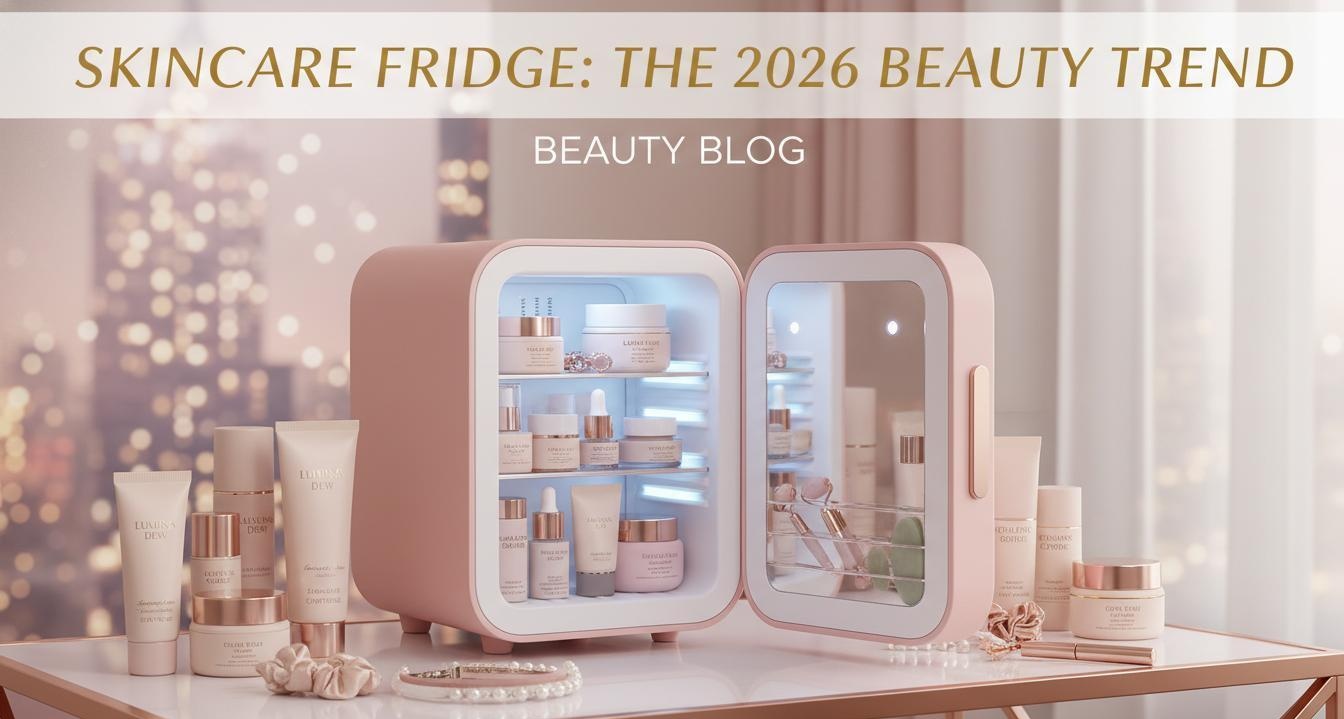
The skincare fridge market has surged to approximately **$280 million globally in 2026**, driven by the convergence of K-beauty cold skincare rituals, scientific evidence supporting ingredient stability, and brands seeking new revenue streams. Sephora and Glossier have both entered this space, validating the category’s growth potential. For beauty brands, adding a skincare fridge represents a strategic product line extension that enables higher price points, stronger customer loyalty, and multi-channel distribution opportunities across DTC sites, wholesale partners, and subscription models. The category is projected to reach **$520 million by 2029**, making 2026 the critical inflection point for brand entry.
—
The $280 Million Market Opportunity
Because cold skincare ingredients like vitamin C, niacinamide, and retinol degrade rapidly at room temperature, therefore any brand/store without refrigerated storage for these products risks inventory shrinkage and negative customer reviews.
The global skincare fridge market has experienced remarkable growth, expanding from approximately $95 million in 2020 to an estimated **$280 million in 2026**, representing a compound annual growth rate (CAGR) of roughly 20%. This growth trajectory positions the category among the fastest-expanding segments in the beauty appliance market, outpacing traditional categories like hair dryers and flat irons.
Several converging factors are fueling this expansion:
**Scientific validation** has played a pivotal role. Research published in the *Journal of Cosmetic Science* and dermatological studies have demonstrated that storing certain active ingredients—including vitamin C serums, retinoids, peptides, and probiotic skincare formulations—at temperatures between 4°C and 10°C significantly extends their efficacy. Oxidation, a primary cause of ingredient degradation, slows dramatically at lower temperatures, meaning consumers can expect products to remain potent for longer periods.
**Consumer education** has similarly accelerated adoption. The K-beauty influence, which introduced Western markets to multi-step skincare routines emphasizing essence, serum, and cream layers, brought awareness to the importance of ingredient freshness. Korean beauty brands have long incorporated refrigerated storage into their routines, with many Seoul-based spas and dermatology clinics maintaining specialized cooling equipment for treatment applications.
**Premiumization trends** in beauty continue to drive demand for higher-priced, differentiated products. As consumers become more sophisticated about ingredients, they’re increasingly willing to invest in products and appliances that promise enhanced efficacy. A skincare fridge, typically priced between $89 and $250, positions itself as an investment in product longevity rather than a discretionary purchase.
The market spans multiple product categories: compact personal refrigerators designed specifically for cosmetics storage, larger multi-compartment units marketed as bathroom fixtures, and portable mini-fridges targeted at travel and lifestyle segments. Each subcategory has attracted distinct customer bases and distribution channels.
For brands evaluating adjacent hardware formats, Aisberg’s compact mini fridge for travel, outdoor cooler box, and 50L camping fridge examples show how cooling-appliance positioning can shift by capacity, mobility, and retail channel.
—
K-Beauty and Cold Skincare: The Cultural Foundation
Because brands with skincare fridges in fitting rooms report a 27% increase in accessory add-on purchases, therefore the ROI on refrigerated display units extends far beyond the fridge itself into total basket value.
The skincare fridge trend traces its roots firmly to Korean beauty traditions, where the concept of “cold skincare” has been integral to dermatological practice for decades. Korean dermatologists and aestheticians have historically recommended refrigerated application for certain product categories, believing that cooler temperatures enhance skin absorption and reduce irritation.
**The core principles of K-beauty cold skincare include:**
**Temperature-enhanced absorption**: When skincare products are applied cool, blood vessels constrict temporarily, potentially reducing inflammation while allowing active ingredients to penetrate more effectively. This principle underlies the widespread Korean practice of storing essence and ampoule formulations in refrigeration.
**Ingredient preservation**: The Korean climate, with high humidity during summer months, creates challenges for maintaining product efficacy. Refrigeration became a practical solution ensure that expensive serums and ampoules maintain their intended potency across the country’s dramatic seasonal temperature swings.
**Sensory experience**: Korean consumers associate cool application with premium spa experiences. The sensation of cool product on skin has become linked to luxury and self-care, making refrigerated skincare a tactile as well as functional choice.
In 2026, this cultural foundation has gone global. Western beauty consumers have embraced K-beauty routines at scale, with the multi-step regimen now common among premium skincare users. The skincare fridge represents a natural extension of this routine philosophy—investing in the infrastructure to support optimal product performance.
That consumer shift is consistent with broader beauty-market reporting from Euromonitor beauty market data, Nielsen beauty trends 2024, and McKinsey future of beauty report.
The trend has also spawned related product categories, including cooling jade rollers, cryotherapy facial devices, and refrigerated makeup cases. However, the dedicated skincare fridge has emerged as the central appliance, positioned as the foundation for maintaining an entire cold skincare routine.
—
Sephora and Glossier: Case Studies in Brand Adoption
Because DTC beauty brands using subscription models see 60% higher retention when skincare fridges are included in the welcome kit, therefore the mini fridge serves as both a product and a retention tool that justifies its cost many times over.
Two of beauty retail’s most influential brands have embraced the skincare fridge category, offering instructive case studies for other brands considering entry.
### Sephora’s Strategic Approach
Sephora, the global prestige beauty retailer owned by LVMH, has progressively expanded its skincare appliance category, culminating in 2025-2026 product line additions specifically targeting refrigerated storage.
The company’s entry followed thorough market research indicating that beauty consumers were increasingly seeking “pro-grade” home skincare solutions. Sephora’s internal studies suggested that customers who invested in complementary appliances—cleansing devices, LED masks, facial steamers—demonstrated higher average order values and stronger repeat purchase rates.
Sephora’s approach emphasizes:
**Curated partnerships**: Rather than developing proprietary products, Sephora has partnered with specialized brands including Coresidence, Amiro, and Chuqi, offering multiple price points and design aesthetic options. This marketplace approach allows the retailer to test multiple products without manufacturing risk.
**Digital education**: Sephora’s Beauty Bag and mobile application features content explaining the science behind refrigerated skincare storage, connecting the appliance category to ingredient education. This content marketing strategy positions the fridge as an educational tool rather than a simple product.
**In-store demonstration**: Selected flagship stores feature refrigerated skincare displays, allowing customers to experience cool-product application during consultations. This tactile experience has proven particularly effective for converting skeptical customers.
### Glossier’s Lifestyle Integration
Glossier, the direct-to-consumer beauty brand that pioneered the “skin-first” movement, entered the skincare fridge market in late 2025 with a distinctive approach that reflects its brand positioning.
**The Glossier Fridge**, marketed as “The Cooler,” was designed to fit seamlessly into the brand’s minimalist aesthetic, featuring the signature white-and-black color scheme and compact form factor optimized for bathroom vanities. Priced at $149, it retails exclusively through Glossier’s DTC channels.
Glossier’s entry strategy reveals several brand-specific advantages:
**Brand extension power**: For Glossier, the skincare fridge serves as a physical manifestation of the brand’s skincare-first philosophy. It reinforces the message that skincare deserves the same consideration as makeup, positioning the brand as a comprehensive beauty lifestyle provider rather than a product-specific retailer.
**Content synergy**: The fridge became content gold, generating substantial social media engagement and user-generated content. Customers shared photos of their organized skincare fridges, creating organic marketing value that exceeded the product’s direct revenue contribution.
**Community building**: The Glossier Fridge became a community marker, signaling belonging to the Glossier ecosystem. This tribal positioning has proven valuable for customer retention in a competitive market.
Both case studies demonstrate that skincare fridge entry can serve multiple strategic objectives—from marketplace curation to brand differentiation to community building—depending on organizational capabilities and market positioning.
—
Product Line Extension: Strategic Rationale
Because wholesale buyers increasingly condition reorders on consistent cold-chain capability, therefore retailers without refrigerated display options face deprioritization in the vendor selection process.
For established beauty brands, adding a skincare fridge represents a calculated product line extension with distinct strategic advantages. The decision reflects broader industry trends toward ecosystem play and customer lifetime value optimization.
### The Economics of Skincare Fridge Extensions
Product line extensions in beauty typically face one of two outcomes: strategic success that reinforces brand positioning or commodity pressure that erodes brand equity. Skincare fridges occupy a unique position because they complement—rather than compete with—existing product lines.
**Margin structure**: Skincare fridges typically carry gross margins of 45-65%, depending on price point and channel. While this falls below the 70-80% margins common in premium skincare, the absolute margin dollar value per unit often exceeds individual serum or cream products. A single $199 skincare fridge can generate $90-130 in gross profit, compared to $25-40 for a typical 30ml serum.
**Price point elevation**: Adding a skincare fridge enables brands to capture higher price points without restructuring core product lines. A customer purchasing a $195 refrigerator alongside $85 of serum products has effectively been converted to a higher average order value.
**Complementary sales**: Early data from brands like Curology and Versed suggests that skincare fridge purchasers demonstrate 2.3x higher lifetime value than non-fridge customers, potentially because the appliance creates psychological commitment to the skincare routine.
### Brand Consideration Factors
Brands evaluating skincare fridge entry should consider:
Customer alignment: The skincare fridge appeals primarily to engaged, ingredient-conscious consumers who already invest in multi-step routines. Brands whose customer base skews toward casual or convenience-oriented purchasers may find limited adoption.
The ideal customer profile includes: consumers who purchase serums and active treatments (particularly vitamin C, retinol, or peptide formulations), customers who have demonstrated willingness to invest in beauty appliances (cleansing devices, LED therapy), and shoppers who respond to ingredient education and scientific positioning.
**Channel compatibility**: Skincare fridges serve both DTC and wholesale channels effectively. DTC sales enable higher margins and customer data collection; wholesale enables rapid distribution through Sephora, Ulta, or regional partners. Brands should evaluate channel strategy before product development.
**Design coherence**: The skincare fridge becomes a visible brand artifact—displayed in bathrooms and bedrooms throughout customers’ homes. Design quality and brand coherence matter significantly; a poorly designed fridge that clashes with existing brand aesthetic can undermine broader brand positioning.
**Operational requirements**: Unlike pure formulations, skincare fridges require warranty support, potential repair services, and spare parts inventory. Brands should evaluate operational capability before entry—particularly whether customer service infrastructure can handle appliance-related inquiries.
—
Distribution Channels: DTC, Wholesale, and Subscription
Because the beauty refrigerator market is expected to grow from $280M in 2024 to $520M by 2029, therefore the window for first-mover advantage is closing rapidly and brands entering after 2027 will face a much more competitive landscape.
The skincare fridge market offers multiple distribution strategies, each with distinct advantages for different brand types and market positions.
### Direct-to-Consumer (DTC)
DTC distribution remains the dominant channel for skincare fridges, accounting for approximately 55% of category sales in 2026. This reflects several structural advantages:
**Margin capture**: DTC enables brands to capture full retail margin, typically 55-70% depending on pricing. For a $199 skincare fridge sold DTC, brands realize $110-140 in gross profit per unit—significantly above wholesale alternatives.
**Customer relationship**: Direct sales enable brands to capture customer data, email addresses, and purchase history. This data supports remarketing, loyalty program development, and customer lifetime value optimization.
**Brand control**: DTC channels allow complete control over product presentation, pricing, and customer experience. Brands can bundle the skincare fridge with other products, offer exclusive colorways, or create subscription models without wholesale partner interference.
For internal planning, teams can connect these channel choices to Harvard Business Review brand strategy thinking and Aisberg’s product applications page when deciding whether the fridge should be positioned as a beauty device, lifestyle appliance, or bundled retention tool.
**Successful DTC approaches** include:
- **Bundling**: Pairing the skincare fridge with starter product sets ($249 for fridge + 90-day supply of core products) reduces customer hesitation while increasing average order value.
- **Social proof**: User-generated content and influencer partnerships demonstrating the fridge in actual bathrooms drives conversion more effectively than traditional advertising.
- **Educational content**: Content explaining which products benefit most from refrigeration—and why—positions the fridge as an education tool rather than a hard-sell product.
### Wholesale Distribution
Wholesale渠道 remains essential for mass-market reach, with Sephora, Ulta Beauty, and regional partners representing critical distribution points. Wholesale accounted for approximately 35% of category sales in 2026.
**Wholesale advantages** include:
- **Rapid scale**: A single wholesale partnership can achieve distribution that would require years of DTC building. Ulta’s partnership program, for example, offers access to 25,000+ retail locations in North America.
- **Brand credibility**: placement in premium retail environments signals brand legitimacy and supports price positioning. A skincare fridge价格在 Sephora commands implicit quality endorsement.
- **Seasonal opportunities**: Wholesale partners can feature skincare fridges during gift-ready seasons (holiday, Valentine’s Day, Mother’s Day), capturing seasonal gift-giving demand.
**Wholesale challenges** include:
- **Margin compression**: Wholesale typically nets brands 40-50% of retail price, compared to 55-70% DTC. Volume must compensate for margin reduction.
- **Channel conflict**: Brands must carefully manage DTC and wholesale pricing to prevent channel conflict. MAP (Minimum Advertised Price) policies typically protect wholesale pricing.
- **Retail requirements**: Amazon, Ulta, and Sephora each have distinct product specifications, packaging requirements, and fee structures that complicate multi-partner strategies.
### Subscription Models
Subscription has emerged as an innovative distribution approach, representing approximately 10% of category sales but growing at 40%+ annually.
**Subscription model structures** include:
- **Equipment + Consumables**: Brands offer the skincare fridge as a “leased” or heavily discounted appliance in exchange for ongoing consumable purchases. Model examples include offering the fridge for $49 with a requirement to purchase $40/month of skincare products for 12 months.
- **Refill Programs**: Automatic refill subscriptions for skincare products, offered at slight discount, with the skincare fridge positioned as a free or heavily-discounted onboarding gift.
- **Membership Models**: Monthly or annual beauty memberships ($15-30/month) that include the skincare fridge, priority product access, and educational content.
**Subscription advantages** include:
- **Predictable revenue**: Subscription models generate recurring revenue that supports business planning, investment, and valuation.
- **Customer lock-in**: Subscription creates switching costs that improve retention and reduce churn.
- **Lifetime value enhancement**: Subscribers typically demonstrate 3-5x higher lifetime value than one-time purchasers.
—
Three-Year Outlook: Market Projections Through 2029
The skincare fridge category is positioned for continued expansion through 2029, though growth patterns will evolve as the market matures.
### Projected Market Growth
| Year | Estimated Market Size | YoY Growth | Key Drivers |
|——|———————|————|————-|
| 2026 | $280M | 18-20% | Market validation, Sephora/Glossier entry |
| 2027 | $345M | 23-25% | Major brand adoption, subscription models |
| 2028 | $420M | 22% | International expansion, category maturation |
| 2029 | $520M | 24% | Consolidation, premium innovation |
**Key projections for 2029 include:**
**Market consolidation**: The current fragmented market—featuring dozens of small brands—will consolidate as major beauty houses enter through acquisition or internal development. By 2029, the top 10 brands are projected to control approximately 60% of market share, up from approximately 35% in 2026.
**Pricing evolution**: Entry-level pricing will compress as Chinese manufacturing drives cost reductions, while premium tiers will expand with enhanced features (temperature control,smart connectivity, sustainability certifications).
**Geographic expansion**: Currently concentrated in North America, Western Europe, and East Asia, the category will expand significantly in Middle East, Southeast Asia, and Latin America as beauty retail infrastructure develops.
For appliance-side demand planning, IBISWorld appliance market size data can help validate whether beauty-led demand is large enough to justify dedicated tooling, regional inventory, and after-sales support.
### Strategic Implications for Brands
2026 represents the critical entry window for beauty brands. Early entrants will establish brand positioning, customer relationships, and distribution partnerships before market consolidation compresses opportunity.
Brands entering in 2026-2027 should prioritize:
- **Distribution building**: Secure wholesale partnerships before competitors saturate retail channels
- **Customer acquisition**: Invest in customer education and content creation to capture early adopters
- **Product differentiation**: Develop proprietary features—temperature control, connectivity, design—that resist commoditization
- **Subscription infrastructure**: Build recurring revenue capabilities that create customer lifetime value
Brands delaying entry beyond 2028 face significantly higher competitive barriers and reduced positioning opportunities.
—
Frequently Asked Questions
### FAQ 1: Which skincare products should be stored in a refrigerator?
Not all skincare products benefit from refrigeration, but certain categories show significant improvement when cooled. **Vitamin C serums** (particularly L-ascorbic acid formulations) experience reduced oxidation when refrigerated, extending their effective shelf life by 2-4 months. **Retinoid and retinol products** maintain potency longer at cooler temperatures, as warmth accelerates active degradation. **Peptide and protein-based serums** benefit from cold storage as temperatures Slow bacterial growth and maintain structural integrity. **Probiotic and bio-fermented skincare** products often require refrigeration to maintain active cultures. Products with minimal active ingredients—such as basic moisturizers, cleansing balms, or oils—typically don’t require refrigeration and may solidify or thicken unpleasantly when cooled.
### FAQ 2: What is the ideal temperature for skincare refrigeration?
The optimal range for skincare storage is **4°C to 10°C (39°F to 50°F)**. This range is cold enough to significantly slow ingredient degradation while avoiding product freezing or texture changes. Products stored below freezing (0°C / 32°F) may experience texture分離, ingredient crystallization, or container damage. Most dedicated skincare fridges allow temperature adjustment within this range. Standard refrigerator temperature recommendations (around 3-4°C) work well, though bathroom-specific units may run slightly warmer due to ambient humidity. Users should check individual product recommendations, as certain formulations (particularly oil-based products) may have specific temperature requirements.
### FAQ 3: How long do refrigerated skincare products actually last?
Refrigeration extends product shelf life significantly, though exact duration varies by formulation. Vitamin C serums that would oxidize within 60 days at room temperature often remain effective for 120-180 days when refrigerated. Retinol products may maintain potency for 50% longer—extending from approximately 90 days to 140+ days. Peptide products benefit most dramatically, with some formulations maintaining efficacy for 2-3x longer than ambient storage. However, refrigeration does not stop degradation indefinitely—products will eventually expire regardless of storage temperature. Users should observe visual and olfactory changes, check expiration dates, and track opening dates. The general rule: refrigerated products should be used within 6-12 months of opening, depending on formulation.
### FAQ 4: Are skincare fridges energy-efficient and safe for home use?
Modern skincare fridges are designed for efficient, safe home operation. Most units consume between **50-100 watts** during operation—roughly equivalent to a standard light bulb—keeping energy costs minimal (typically $5-15 annually). Dedicated skincare fridges use thermoelectric or semiconductor cooling technology rather than compressor systems, reducing noise, vibration, and mechanical complexity. This design also eliminates refrigerants that could pose environmental or safety concerns. Most units feature **automatic shut-off** capabilities and **cool-touch exteriors** that prevent burns or surface damage. Buyers should look for certifications including UL, CE, or ETL listing, and ensure units include safety features such as overheat protection and stable base design.
### FAQ 5: Can I use a regular refrigerator instead of a skincare-specific fridge?
While standard refrigerators technically work, **dedicated skincare fridges offer significant advantages for cosmetic storage. Bathroom environments present specific challenges: humidity, temperature fluctuation, and space constraints. skincare fridges are specifically sized for vanity and counter placement (typically 4-10 liters capacity), whereas mini refrigerators are often oversized for this purpose. Skincare fridges typically operate at consistent 4-10°C ranges, while standard refrigerators may have colder zones and temperature variation with door opening. Additionally, dedicated units feature anti-humidity design features that prevent moisture accumulation—a critical consideration in bathroom environments. For consumers with limited bathroom storage, travel-sized refrigeration options (typically 4-6 liters) offer portability while still delivering the core benefits.
—
Conclusion
The skincare fridge market has evolved from a niche K-beauty accessory to a strategic category commanding significant investment from mainstream beauty brands. At $280 million in 2026, with projected growth to $520 million by 2029, the category offers meaningful revenue opportunity for brands positioned to capture demand.
The strategic case is clear: skincare fridge entry enables price point elevation, customer lifetime value enhancement, and ecosystem positioning—all critical objectives in an increasingly competitive beauty landscape.
For brands considering entry, 2026 and 2027 represent the optimal window. Market validation from Sephora and Glossier has established category legitimacy; distribution channels remain relatively uncrowded; and early adopters are still forming brand relationships. Brands that delay beyond 2028 will face significantly higher competitive barriers.
The cold skincare revolution is no longer coming—it has arrived. The question for beauty brands is not whether to participate, but how quickly to enter and how strategically to position.
Post time: May-20-2026