

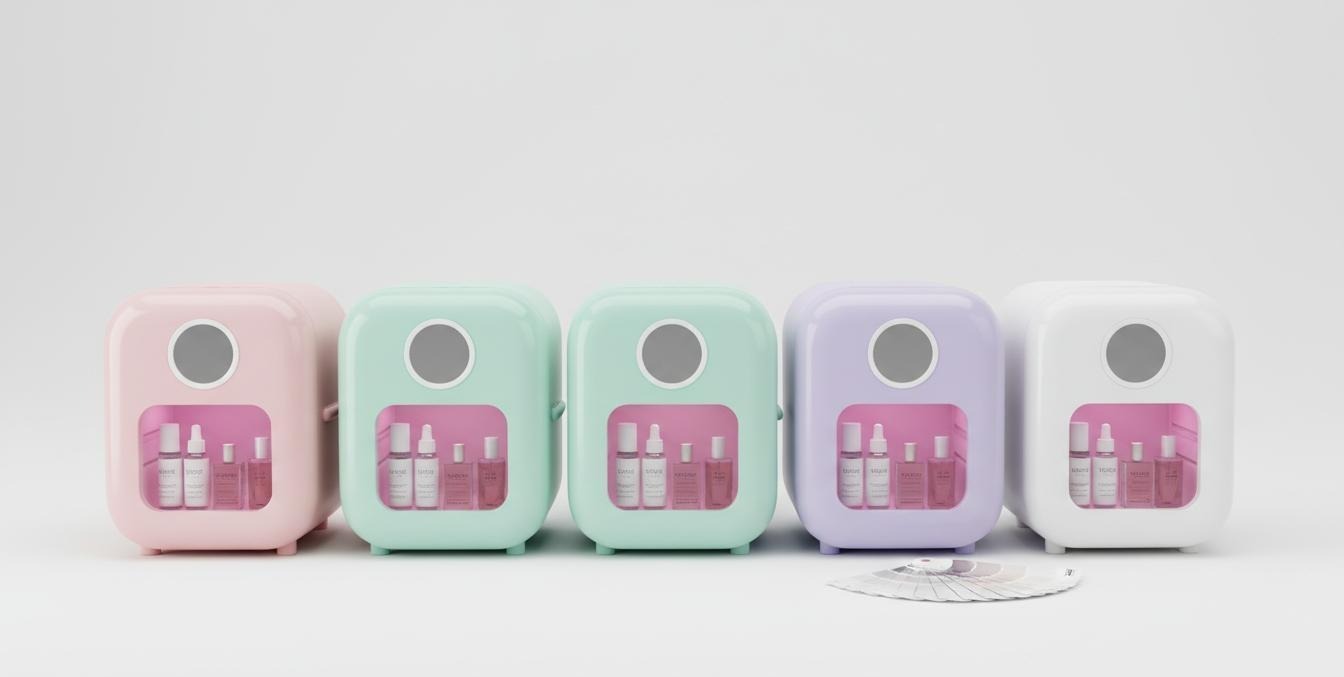
The beauty industry is undergoing a quiet revolution in how skincare and cosmetics are stored, presented, and delivered. As subscription boxes have become a dominant force in consumer retail, beauty brands and retailers are searching for differentiated products that elevate unboxing experiences and extend the shelf life of temperature-sensitive formulations. Enter the makeup fridge — a compact, aesthetically designed cooling appliance purpose-built for cosmetics storage. For wholesale buyers sourcing products for beauty subscription models, understanding the nuances of capacity selection, colour customisation, and supply chain logistics is essential to staying competitive in a crowded market.
The global beauty subscription market was valued at over USD 19 billion in 2023 and continues to expand as consumers seek convenience, discovery, and premium experiences at home. Central to this growth is the unboxing moment—a touchpoint that determines whether a subscriber becomes a loyal customer or churns after a single delivery. A study by Packaged Facts found that 67% of beauty subscription subscribers consider the quality of packaging and product presentation as a key factor in overall satisfaction. Makeup fridges directly address this consumer expectation by combining functional temperature control with aesthetic presentation that enhances the perceived value of every delivery.
Why Beauty Brands Are Investing in Makeup Fridges for Subscription Boxes
Makeup fridges serve a functional purpose beyond aesthetics. Many modern skincare products—particularly those containing botanical extracts, vitamin C serums, probiotic formulations, and certain sunscreen actives—are temperature-sensitive. Storing these items in a standard room-temperature environment can degrade active ingredients within weeks. A dedicated makeup fridge maintains a consistent cool temperature (typically between 35–45°F / 2–7°C), which is ideal for preserving the efficacy of heat-labile cosmetic ingredients.
The FDA recommends that consumers store certain cosmetic products in a cool, dry place to maintain product integrity, and a makeup fridge provides precisely this controlled environment. For subscription businesses where products may spend time in transit or in fulfilment warehouse environments before reaching the consumer, the temperature stability provided by a makeup fridge extends usable shelf life and reduces the risk of customer complaints about degraded product quality.
For beauty subscription box operators, integrating a compact makeup fridge as a subscription add-on or a bundled product creates multiple revenue streams. Brands can offer a curated makeup fridge pre-loaded with seasonal products, or sell the fridge itself as a standalone item. Wholesale procurement of makeup fridges allows retailers to achieve attractive margin structures while offering a differentiated product that competitors may not have in their catalogue.
Understanding Capacity: 4L vs. 8L — Which Is Right for Your Business Model?
One of the most consequential decisions in makeup fridge wholesale procurement is selecting the appropriate storage capacity. The two most common capacities in the beauty fridge category are 4 litres and 8 litres. Each serves distinct use cases, and matching the right capacity to your business model can significantly impact customer satisfaction and repeat purchase rates.
4-Litre Makeup Fridges: The Subscription Add-On Champion
A 4-litre makeup fridge is compact enough to fit on a vanity desk, a bathroom counter, or inside a larger subscription box packaging. At approximately 22cm × 18cm × 24cm in external dimensions, it strikes an ideal balance between interior storage volume and physical footprint. For beauty subscription businesses that include the fridge as a recurring promotional item, the 4-litre model is the most cost-effective and logistics-friendly option. The standard 4-litre makeup fridge from ICEBERG is engineered for this specific application with a thermoelectric cooling system, reversible door hinge, and a satin-smooth interior lining that accommodates standard 30ml serum bottles and 50ml jar formats.
In terms of storage capacity, a 4-litre unit can comfortably hold: 6–8 standard 30ml serum bottles; 3–4 full-size moisturisers or creams in jars; 2–3 face masks (sheet or pot format); and a small collection of lip balms and eye creams. The 4-litre model is particularly popular among direct-to-consumer beauty brands that emphasise portability and desktop usage, making it a strong candidate for both subscription fulfilment and one-time retail sales.
8-Litre Makeup Fridges: The Premium Experience Model
The 8-litre makeup fridge doubles the storage capacity while maintaining a relatively small form factor (approximately 28cm × 22cm × 28cm). The 8-litre variant from ICEBERG provides additional interior space that accommodates full-size product formats without crowding. For subscription businesses targeting premium or mass-tige market segments, the 8-litre model allows brands to include a more generous product assortment inside the fridge—a complete skincare routine (cleanser, toner, serum, moisturiser, eye cream) plus sheet masks and lip treatments.
The additional volume also makes the 8-litre model suitable for: seasonal subscription boxes featuring larger-sized products; gift sets where the fridge itself is the primary container; retail display scenarios where the fridge is sold filled with products as a complete gift package; and spa and salon environments that require broader product storage for multiple clients. From a pricing perspective, the 8-litre model commands a higher wholesale unit price but also supports higher retail pricing, resulting in potentially superior per-unit margins.
Pantone Colour Matching: Elevating Brand Identity Through Custom Aesthetics
In the competitive beauty subscription landscape, visual differentiation is paramount. A product that looks professionally curated and on-brand commands attention, while a generic white box signals low perceived value and undermines the premium positioning of the beauty products inside. Custom colour matching through the Pantone Colour Matching System is one of the most effective ways for beauty brands to transform a makeup fridge from a commodity appliance into a brand extension tool.
Pantone’s colour matching system provides a universal language for colour communication that is used across the global design and manufacturing industries. By specifying a Pantone reference number (e.g., Pantone 213 C for a signature rose pink), beauty brands can ensure that their custom-coloured makeup fridges match their brand identity precisely—not just approximately, which is what happens when colour is specified without a reference standard and left to the supplier’s colour judgement.
ICEBERG’s OEM and ODM capabilities include full Pantone colour matching services, with a minimum order quantity for custom colours of typically 200–500 units depending on the specific colour and finishing requirements. For beauty subscription brands that have established seasonal colour palettes, coordinating the makeup fridge colour with the season’s product line creates a cohesive unboxing experience that reinforces brand recognition. ICEBERG’s 40,000 square metre manufacturing facility includes high-performance injection moulding capability that enables precise colour matching across large production runs while maintaining colour consistency from unit to unit.
Thermoelectric Cooling Technology: Why Makeup Fridges Use Peltier Systems
Unlike domestic refrigerators that rely on compressor-based cooling (which uses refrigerant compression and expansion cycles), most compact makeup refrigerators—including those manufactured by ICEBERG—use thermoelectric cooling technology, also known as the Peltier effect. This technology uses an electric current passed through a junction of two dissimilar conductors to create a temperature differential, with heat absorbed on one side (the cooling side) and dissipated on the other side (the hot side).
For makeup fridge applications, thermoelectric cooling offers several important advantages: no moving mechanical parts means no vibration (important for the long-term stability of cosmetic emulsions); silent operation with no compressor noise (important for bedroom and vanity desk use); compact form factor with no need for bulky compressor components; and DC operation compatibility, enabling both AC mains power and USB/car power adapters for travel use.
However, thermoelectric systems are less energy-efficient than compressor systems and have a more limited cooling differential (the temperature difference between inside the fridge and ambient temperature). The typical thermoelectric makeup fridge can achieve an interior temperature approximately 20–25°F (11–14°C) below ambient temperature. At room temperature (72°F / 22°C), this means a makeup fridge maintains an interior of approximately 47–52°F (8–11°C)—within the optimal range for cosmetic product storage.
OEM and ODM Options: Building Your Brand on ICEBERG’s Manufacturing Capability
ICEBERG Electronic Appliance Co., Ltd. is a professional factory producing electronic mini fridges, cosmetic fridges, camping cooler boxes, and compressor car fridges. With a manufacturing history of ten years and a facility covering 40,000 square metres, the company supports OEM (private label) and ODM (custom design) service models for international buyers seeking to establish or expand their presence in the beauty appliance market.
OEM (Private Label): ICEBERG offers private label manufacturing for buyers with existing brand identity who wish to have their logo, packaging design, and instruction materials applied to ICEBERG-designed products. The private label process typically involves: artwork approval (7–14 days for sample prototypes), MOQ confirmation (typically 200–500 units per item), and production lead time of 4–6 weeks after artwork approval. For beauty brands seeking to enter the makeup fridge market quickly with established product designs, OEM private label is the most efficient pathway.
ODM (Custom Design): For buyers seeking differentiated products that cannot be achieved through private-label modification of existing designs—such as custom exterior design, unique interior configurations, integrated smart features, or bespoke colour and finish specifications—ICEBERG’s ODM capabilities enable full custom product development from concept to production. Market research from Mordor Intelligence indicates that compact cosmetic refrigerators in the 4–10 litre range are experiencing the fastest demand growth globally, with custom design differentiation being a key competitive lever for premium brands in this market.
Certification Requirements for International Beauty Appliance Distribution
Beauty brands and wholesale distributors procuring makeup fridges for international resale must ensure that the products carry the necessary electrical safety and electromagnetic compatibility certifications for the target market. The most commonly required certifications include:
- CE marking: Required for electrical products sold in the European Economic Area. Confirms compliance with applicable EU Low Voltage Directive (LVD) and Electromagnetic Compatibility (EMC) directives.
- ETL or UL listing: North American market requirement for electrical products, confirming compliance with UL 60335 (household appliance safety standard).
- CCC certification: Required for electrical products sold in China. Chinese Compulsory Certification is administered by CNCA.
- RoHS compliance: Required in the EU and increasingly in other markets. Confirms that the product does not contain restricted hazardous substances (lead, mercury, cadmium, hexavalent chromium, etc.).
ICEBERG’s manufacturing facility maintains comprehensive certification coverage for its product portfolio, supporting CE, ETL, CCC, and RoHS requirements as standard. For beauty brands in emerging markets where certification infrastructure may be less developed, working with an established manufacturer like ICEBERG that already holds these certifications eliminates a significant barrier to market entry and speeds time-to-market for new private-label product lines.
MOQ, Pricing Structure, and Negotiation Strategy for Wholesale Procurement
Wholesale procurement of makeup fridges operates on volume-based pricing structures that reward committed order volumes with progressively lower per-unit costs. Understanding the pricing breakpoints and negotiation levers available to buyers enables procurement managers to structure orders that optimise both unit cost and inventory risk.
MOQ tiers: Most manufacturers establish MOQ tiers where the minimum order quantity required for standard products is 100–200 units, with price breaks appearing at 500, 1,000, and 3,000 units. For custom colour or custom logo (private label) configurations, the MOQ typically starts at 200–500 units due to the setup cost of tooling changes.
Price negotiation considerations: Beyond simply requesting a lower per-unit price, procurement managers can often negotiate: payment terms (e.g., 30% deposit, 70% balance against confirmed shipping documents), lead time flexibility (longer lead times often enable lower pricing by giving the manufacturer scheduling flexibility), packaging format (gift box vs. mail box vs. naked product), and exclusivity arrangements (sole distribution rights in a defined territory in exchange for committed annual volume).
According to industry market data, the beauty appliances market—encompassing makeup fridges, facial cleansing devices, and other beauty tech products—is experiencing 8–12% annual growth globally, driven by consumer interest in professional-grade home skincare routines. This growth creates a favourable procurement environment for buyers who can commit to annual volume, as manufacturers are increasingly willing to negotiate on pricing and lead time in exchange for volume commitments.
Logistics and Freight Considerations for Beauty Subscription Fulfillment
For beauty subscription businesses, the physical logistics of getting makeup fridges from manufacturer to fulfilment centre involve several decision points that affect total cost and operational efficiency. The two primary logistics models are sea freight (LCL or FCL container shipment) and air freight.
Sea freight: For orders of 500 units or more, sea freight becomes the cost-effective choice. A 20-foot container accommodates approximately 1,500–2,000 4-litre makeup fridges (depending on packaging configuration), and sea freight from major Chinese ports (Ningbo, Shanghai, Shenzhen) to major destination ports globally typically costs USD 2,000–5,000 per container. Transit times range from 2–4 weeks to Asia, 4–6 weeks to North America, and 3–5 weeks to Europe. The dominant Incoterms for sea freight procurement are CIF (Cost, Insurance, Freight) for buyers who want the supplier to arrange shipping, or FOB (Free on Board) for buyers who arrange their own freight forwarding.
Air freight: For smaller orders or time-sensitive shipments, air freight offers speed at a significant cost premium. Air freight rates from China to North America or Europe typically range from USD 4–8 per kilogram, and a 4-litre makeup fridge weighs approximately 3–4 kg in its gift box packaging. This means air freight for 100 units could cost USD 1,200–3,200 in freight charges alone, compared to USD 0.20–0.50 per unit equivalent for sea freight on a 1,000-unit order.
ICEBERG’s location in Ningbo—one of China’s major container ports—provides efficient access to global shipping routes and competitive freight rates for both sea and air freight. The company’s location advantage and established logistics partnerships enable it to support buyers in managing freight costs as part of the overall procurement package.
Conclusion: Building a Makeup Fridge Sourcing Programme for Beauty Brands
Procurement of makeup fridges wholesale for beauty subscription and retail applications requires a balanced approach that considers product specification, certification requirements, pricing structures, logistics, and supplier capability. The most successful beauty brand procurement programmes are those that develop a clear understanding of their end-consumer’s unboxing expectations, translate these expectations into specific product requirements, and source from a manufacturer capable of meeting those requirements consistently at scale.
The key procurement success factors are: matching fridge capacity (4L or 8L) to the specific subscription model and product assortment; specifying Pantone colour references precisely to ensure brand-consistent custom colours; verifying that the supplier holds all required certifications for the target market; understanding the OEM vs. ODM trade-offs and selecting the model that matches the brand’s design investment capability; and structuring orders with sufficient volume commitment to unlock competitive unit pricing while maintaining manageable inventory risk.
For beauty brands seeking a manufacturer with proven capability in cosmetic refrigeration, ICEBERG Electronic Appliance Co., Ltd. offers a 10-year track record in beauty appliance manufacturing, a 40,000 square metre production facility, and OEM/ODM services backed by comprehensive certification and a product portfolio that has been exported to over 80 countries.
ICEBERG Electronic Appliance Co., Ltd. is a professional factory producing electronic mini fridge, cosmetic fridge, camping cooler box and compressor car fridge. With a history of ten years, the factory covers an area of 40,000 square metres, equipped with high-performance injection moulding machines, PU foam machines, constant temperature testing machines, vacuum extraction machines, auto packing machines, and other advanced equipment to ensure strict quality control. Products have been exported to over 80 countries and regions worldwide. The company supports OEM and ODM service for models and packaging.
Post time: Jun-02-2026